✖

✖
TABLAO in the CONDEDUQUE in Madrid
TABLAO, a creation of the interdisciplinary artist Ernesto Artillo halfway between installation and performance for the cuadro: Yerai Cortés, Niño de Elche, Andrés Marín & Rocío Molina. May 17-18 at the Condeduque in Madrid
✖
Festival de la Guitarra 2024
Andrés Marín will dance with Alfredo and David Lagos at the FESTIVAL DE LA GUTARRA in Madrid on May 4th at the Teatros del Canal - Sala Verde at 21:00h.
+Info and tickets:
http://rgbmultimedia.es/proyectos2024/suma/guitarra/sabado-4-mayo.html#andres-marin
✖
Museu Picasso de Barcelona
In this tribute to Picasso, The painter who dances or the dancer who paints, Andrés Marín explores the avant-garde rupturism of Picasso's work through his choreography, accompanied on guitar by Pedro Barragán.
It will be at the "Las Meninas" Hall of the Museu Picasso in Barcelona on March 20th at 9pm.
+Info and tickets
✖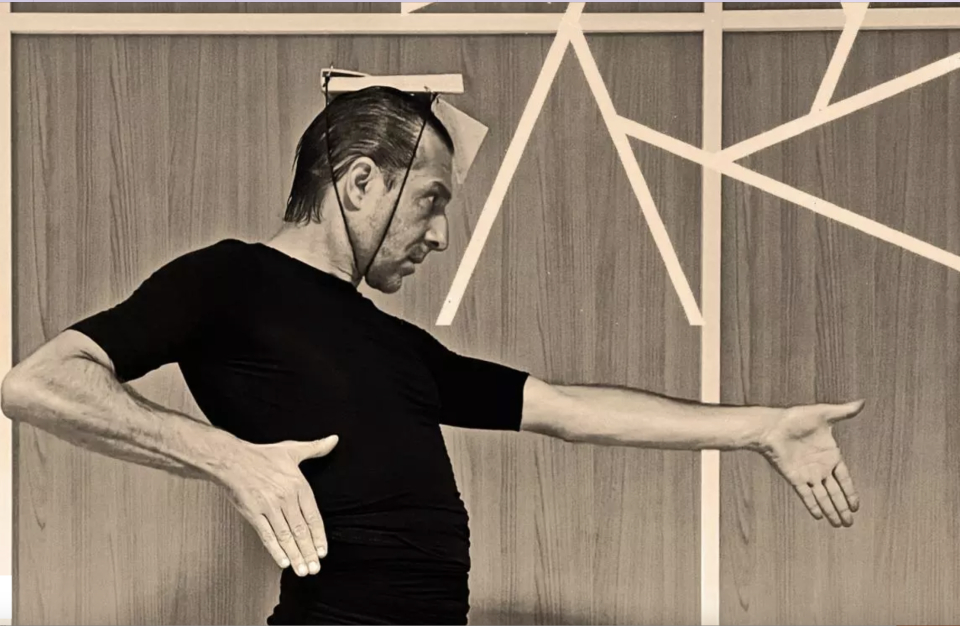
World Premiere Recto Y Solo
"He who dances knowing in advance what he's going to do is more dead than alive". Signed by Vicente Escudero, a historic figure in flamenco, this statement seems to have been written for Andrés Marín. Across the ages, a deep affinity unites the choreographer, always keen to experiment, with the man who, at the beginning of the 20th century, rubbed shoulders with the aesthetic avant-gardes before becoming the first to dance the "seguiriya". Recto Y Solo, presented in its world premiere at Chaillot - Théâtre national de la Danse, revisits the rules of masculine dance once laid down by Escudero in his famous "Decalogue". Marín deconstructs flamenco's hetero-patriarchal culture in the light of contemporary views on gender identity, and rediscovers the very essence of his predecessor's concepts. His performance, supported by Pedro Barragán's inspired guitar, is nourished by the experience of body, time and space. Making his own another of the master's aphorisms: "I'd rather dance unconsciously than intelligently".
Isabelle Calabre
10-11FebChaillotTheatreNacionaldelaDanse
✖
Today in the GUGGENHEIM in Bilbao
Dancers and choreographers Andres Marín -National Dance Award 2022- and Jon Maya -three Max Awards (2020) and National Dance Award 2017- stand before Picasso's La dama oferente, one of the two bronze sculptures cast in 1972 whose cement version was shown next to Guernica at the 1937 Paris International Exposition. Matter and body engage in a suggestive dance dialogue, flowing between bodies, cultures and disciplines in this unique event.
PICASSO IN DANCE on December 3 at the Guggenheim Museum in Bilbao at 7:30 pm.
✖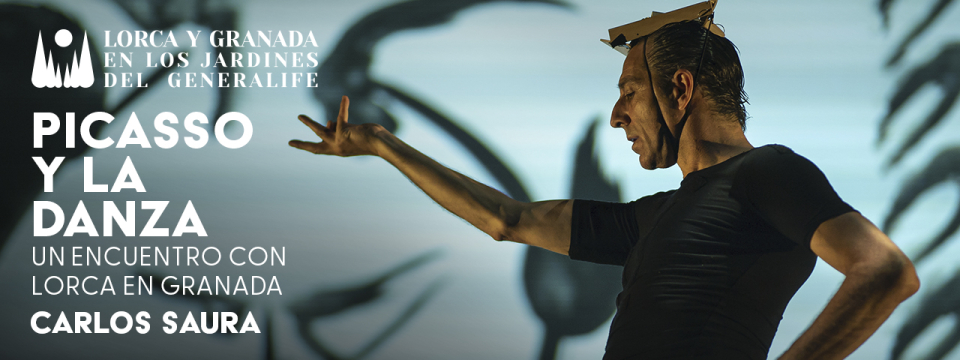
PICASSO Y LA DANZA en el Generalife
Today is the premiere of 'Picasso and dance! An encounter with Lorca in Granada'.
Lorca and Granada returns to the Generalife Gardens from August 2 to 26 with a show that condenses the way of understanding the dance of three geniuses: Lorca, Picasso and Saura.
Under the artistic direction of Carlos Saura Medrano, the choreographic direction of Andrés Marín and the musical direction of Daniel Doura, the show offers a journey through the experiences and life paths of its protagonists.
Guest artists: Farruquito, Rocío Molina, Israel Fernández, Rosario La Tremendita, Rocío Molina, Ana Morales, Manuel Lombo, Antonio Canales and Manuela Carrasco.
✖
PICASSO AND DANCE
Andrés Marín will participate as choreographer, assistant director and artistic coordinator of the show "Picasso y la danza", a proposal of the Junta de Andalucía to commemorate the fiftieth anniversary of the death of the painter, sponsored by the Fundación Bancaria Unicaja. It has a scenography specially designed for the occasion by the recently deceased Carlos Saura. In his creative testament Saura designed a show with two parts: on the one hand, a review of the famous ballets in which the painter participated in the scenery and costumes; and on the other, the most revolutionary flamenco art.
The world premiere of "Picasso y la danza" will take place on June 3 at the Teatro Soho Caixabank in Malaga. It features a large cast of artists, including Andrés Marín, Marina Heredia, Rosario 'la Tremendita', Israel Fernández and Rocío Molina, among others. The company will subsequently take the show to different stages around the world over the next two years.
✖
Festival FURIA Madrid 2023
Tablao is an installation piece by Ernesto Artillo that links two apparently opposing spaces: the Corral de la Morería and the Museo Centro de Arte Dos de Mayo. With the live collaboration of Yerai Cortés, Niño de Elche, Andrés Marín and Rocío Molina.
May 4th at the CA2M Museum in Madrid at 20:00h.
✖
National Dance Award 2022
The National Dance Award 2022, granted by the Ministry of Culture and Sports through the National Institute of Performing Arts, recognizes choreographer Andrés Marín and his talent for "walking the line between tradition and the avant-garde, with a very personal choreographic language, which dialogues without apriorisms with other disciplines that he incorporates naturally". The jury underlined "his great international projection, as well as the experimentation and risk that mark his creations such as D. Quixote, La vigilia perfecta, Éxtasis Ravel and the recent Yarin".".
✖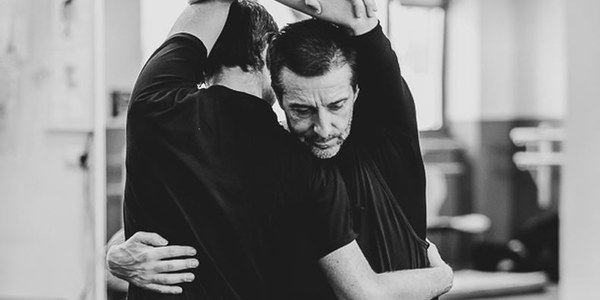
YARIN premiere in the Bienal de Flamenco-Andrés Marín & Jon Maya
YARIN premiere on Thursday, September 29 at the Teatro Central in Seville at 10:00 p.m.
Every step today, builds a path tomorrow.
We draw, we breathe, we intuit, we offer a look towards an outstretched hand. Offer and collect. It shares. Do not shy away from the roots. It looks towards them, deepens, sows. It dialogues, converges, shares. It is our art.
YARIN is the tomorrow that we imagine together; the window to the gaze of the other, where the leaves, ignited by the dialogue, peep out. YARIN is root. YARIN is encounter. YARIN is dialogue. YARIN is synonymous with tomorrow and the complicit look at the window of the other.
Root, depth, openness, universality.... These characteristics are closely linked to the trajectories and personalities of Andrés Marín and Jon Maya. The flamenco roots of Marín and the Basque dance of Maya are the tools from which the creation of both of them starts; and from there, both of them are immersed in a constant dialogue of encounter with other cultures, disciplines and artistic realities.
In this project, Maya and Marín have decided to unite their creative capacity in an experience, where they delve into the common elements of Basque and Flamenco culture, being faithful to their origins and establishing an open dialogue based on their roots. The desire to connect Basque and Flamenco roots has united them along the way. Julen Achiary accompanies them with his voice live.
Technical, artistic and collaborators information:
Dancers: Andrés Marín and Jon Maya.
Live music: Julen Achiary
Choreography: Andrés Marín, Jon Maya and Sharon Fridman
Choreographic assistance: Melania Olcina
Dramaturgy and interpretation assistance: Sharon Fridman
Lighting design: David Bernués
Sound design: Xabier Erkizia
Costume design: Ikerne Giménez
Management and production team: Doltza Oar-Arteta y Elena García
Technical team: Acrónica Producciones
Production: Kukai Dantza
Collaborating and co-producing entities: Bienal de Flamenco de Sevilla, Sala BBK de Bilbao, Errenteria City Hall, Festival Escenas de Patrimonio, Festival de Itálica, Malandaine Ballet Biarritz, Teatro Victoria Eugenia de San Sebastián, Etxepare Euskal Institutoa, Mikel Laboa Katedra.
✖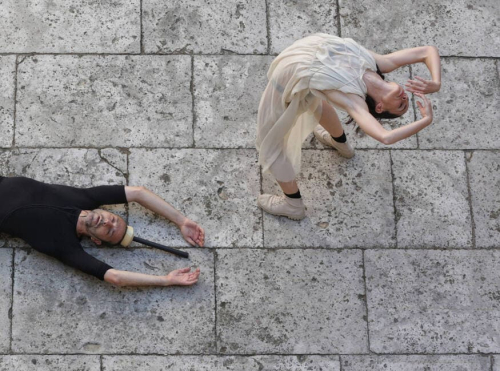
EN LA HORA ENCENDIDA in SAGUNT A ESCENA
En la hora encendida is Andrés Marín's revision of Prelude to the Afternoon of a Faun, a true touchstone of modern dance. On Debussy's music, Marín, accompanied by the dancer Lucía Vázquez, will set in motion the springs of his personal flamenco arcane, embodying the energy, the profiles and the foreshortenings of a faun if perhaps more angular and stark.
Friday 26, August 2022 at the Centre Cívic - Off Romà of SAGUNTO
✖
Premiere of SKIAGRAPHIA in Julidans (NL)
In the visual dance performance Skiagraphia - 'writing with shadow' - Andrés Marín and Siba Sahabi join forces with a unique artistic team, consisting of Dutch film director and dance dramaturg Marinus Groothof and Dutch composer Renger Koning. Besides the charismatic Marín, another dance artist has been engaged: the American dancer Kalin Morrow, known in the Netherlands for her cooperation with Club Guy & Roni and Dunja Jocic.
Central to Skiagraphia is Pliny's creation myth, which deals with the human urge to hold on to life. This ancient myth is taken to the future and linked to the modern ideas of transhumanism. This philosophical movement tries to achieve what humanity dreams of: continuing life beyond our 'expiry date', for example by uploading our brains in digital format.
The performance explores this theme using two versions of the same person: the mortal (Marín) and the immortal (Morrow). The immortal is free from worries of limited time and explores the possibilities of an infinite life. But he also misses the emotions associated with transience, loss, and limited lifespan. If death is the driving force of life, what urge does the immortal have to live?
The theme of re-creation is made tangible by an ingeniously designed set by Siba Sahabi: a kinetic landscape of transforming, geometric sculptures set in motion by the performers in a mysterious play of light and shadow.
July 12th in the international contemporary dance festival Julidans in Amsterdam
✖
Tríptico para un cuerpo
MÚSICA CONTEMPORANEA. MADE IN SEVILLE. PRODUCCIÓN ESPACIO TURINA.
"Tríptico para un cuerpo" es un espectáculo que abre nuevos espacios sonoros y visuales de encuentro para la danza flamenca y la música contemporánea. La propuesta persigue no dejarse cegar por la poderosa luz del flamenco y llegar así al lugar oscuro de su raíz verdadera, esa que siempre se alimenta, por necesidad, del arte de su tiempo a través de la experimentación y la escucha.
Tres universos sonoros, los de Cesar Camarero, Alberto Carretero y José María Sánchez-Verdú suceden en resonancia con el imaginario gestual del cuerpo de Andrés Marín y entran en contacto, dialogan, se funden o se oponen. Tres (más una) esferas concéntricas cuyas trayectorias escapan de la órbita de los tópicos para abrir los oídos, los ojos, la mente, la piel, las entrañas a lo realmente "jondo", luchando contra lo superfluo, lo banal o lo trillado.
El 2 de febrero en el Espacio Turina (Sevilla)
COMPRAR ENTRADAS
✖
Absolute Premiere ÉXTASIS/RAVEL (Andalusia Show)
The opening of the International Festival of Dance Itálica 2021 will be the absolute premiere of ÉXTASIS / RAVEL (Andalusian Show) on June 22 and 23.
+Info
In the Teatros del Canal de Madrid del 13-17 de octubre 2021
ÉXTASIS / RAVEL (Andalusia Show)
Original idea by Andrés Marín
General artistic collaboration: José Miguel Pereñíguez
Choreography and dance: Andrés Marín with Vanessa Aibar, Andrea Antó, Chloé Brûlé and Lucía Vázquez
Music by Maurice Ravel and Alberto Carretero
Musical director: Andrés Marín
Piano: Oscar Martín
Saxophones: Alfonso Padilla
Percussion: Daniel Suárez
Lighting Design: Yaron Abulafia
Sound: Rafael Pipió
Costumes: Roberto Martínez, Andrés Marín and José Miguel Pereñíguez
Scenic space: Andrés Marín and José Miguel Pereñíguez
Photo: Luis Castilla
Co-produced by Madrid Cultura y Turismo, SAU, El Festival Internacional de Itálica and Andrés Marín Flamenco Abierto, S.L.
✖
CÁDIZ EN DANZA
Andrés Marín will present at the Alameda Apodaca in Cádiz at 6.30 pm EN LA HORA ENCENDIDA, a particular review of 'Afternoon of a Faun', a true touchstone of modern dance. With music of Debussy, under the harsh light of the Andalusian midday and facing the straight line of the sea's horizon, Marín, accompanied by dancer Lucía Vázquez, will set in motion the springs of his personal flamenco arcane, embodying energy, profiles and the foreshortening of a faun if perhaps more angular and stark. A duet in which faun and nymph, manifest themselves fully, each one seized by his own desire, while hiding from the other in broad daylight.
Andrés Marín: choreographer and dancer | Lucía Vázquez: choreographer and dancer | José Miguel Pereñiguez: artistic collaboration
+INFO
✖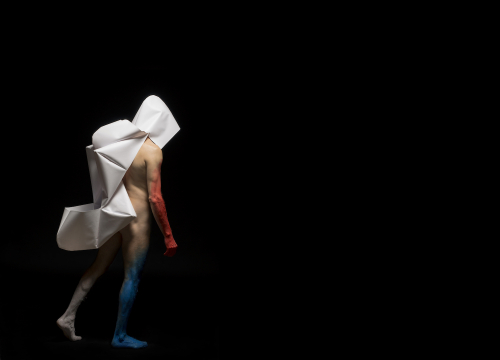
Giraldillo Dance Award -Andrés Marín
On Sunday April 25th at 12.00, the Giraldillo Awards Ceremony of the XXI Bienal de Flamenco will take place at the Lope de Vega Theater in Seville. The gala ends a week of performances by the Giraldillos award winners from the last edition of the Bienal de Flamenco. Andrés Marín , Giraldillo Dance Award, will present JARDÍN IMPURO on April 23.
+ Info Gala April 25th
Tickets Jardín Impuro April 23rd </ p>
✖
Museu d'Art Contemporani de Barcelona
Soliloquios es un encuentro entre el espacio museístico y la danza. Proyecto ideado por Jon Maya, se trabaja sobre una interpretación del Aurresku, danza tradicional vasca. Jon Maya, Cesc Gelabert y Andrés Marín, siguiendo el patrón coreográfico de Gelabert, bailan dispersos por tres salas del museo mientras el público realiza un viaje por ellas. Tres trayectorias personales y tres miradas hacia el arte convergen en un mismo espacio y tiempo, salpicado por la instalación sonora de Luis Miguel Cobo, que propone una contaminación acústica constante y simultánea.
El 13 de marzo en el MACBA a las 20:00h
✖
XXI Bienal de Flamenco
LA VIGILIA PERFECTA, la nueva a creación de Andrés Marín que la Bienal define como "un conjunto de micropiezas de danza que serán ejecutadas por las dependencias del Monasterio de la Cartuja en las denominadas horas canónicas, desde antes del amanecer hasta la hora de completas en un espectáculo abierto al público, que será filmado y constituirá una obra de arte visual", se desarrollará en el Centro Andaluz de Arte Contemporáneo (Monasterio de la Cartuja) el 3 de octubre dentro del marco de la XIX Bienal de Flamenco de Sevilla 2020.
LA VIGILIA PERFECTA 3 de octubre en el Centro Andaluz de Arte Contemporáneo (Monasterio de la Cartuja) XXI Bienal de Flamenco SEVILLA
Leer sinopsis
✖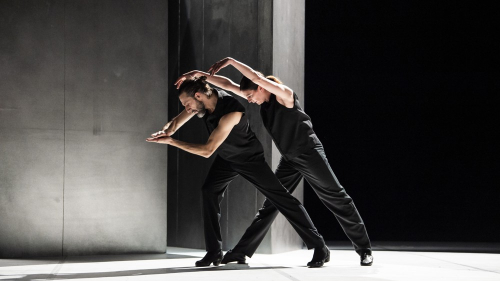
Marie-Agnès Gillot / Andrés Marín / Christian Rizzo
MAGMA
Creation 2019| On tour 2019-2020 |
A creation that brings together three giants of dance and creates a sensitive and passionate space, where the art of dance expresses its fragile and persistent rites.
Produced by the Théâtre de Suresnes Jean Vilar
+ Info
Tour dates
VIDEO

✖
BACTERIAS en la Fundación Cajasol
BACTERIAS es una propuesta escénica ideada por el bailaor Andrés Marín donde se usa la dinámica de la contaminación para penetrar territorios creativos personales y experimentales.
"Como artista de flamenco cuando veo una partitura todas las notas parecen como partículas de un organismo complejo y a la vez ordenado. Qué pasaría si algunas de esas notas, como bacterias, se salen del orden tonal y rítmico que las rige y se ponen a contaminar el resto del organismo? Ese desorden tendría una energía singular que mezcla improvisación musical y coreográfica, y como un virus pide al organismo una respuesta vital para seguir existiendo. Como las bacterias, generamos nuestro propio disturbio artístico y a la vez encarnamos su respuesta orgánica y estética."
En la Fundación Cajasol en Sevilla el día 11 de abril 2019
✖
European Film Awards 2018
Andrés Marín participa como bailaor y coreógrafo en la ceremonia de los Premios del Cine Europeo 2018 en el Teatro de la Maestranza en Sevilla el día 15 de diciembre a las 19:30h.
Video clip
✖
D. QUIXOTE Flamenco Biënnale Nederland
Inauguración del VII Flamenco Biënnale Nederland con D.QUIXOTE
18 de enero 2019 en el Stadsschouwburg, AMSTERDAM
✖
XX Bienal de Flamenco
Ya están a la venta las entradas para el estreno de D.QUIXOTE en España el 16 de septiembre en el Teatro de la Maestranza dentro de la XX Bienal de Flamenco de Sevilla.
✖
New work D. QUIXOTE 2017/2018
7-10 November 2017 World Premier Théâtre National de Chaillot
More information: D.QUIXOTE
Share this event
✖
YATRA - Upcoming performances 2017
"YATRA" means trip en Sanskrit. For this musical pilgrimage, Andrés Marín sets off from flamenco to Northern India, with a detour via the hip-hop of Kader. A new way for the choreographer to continue his quest to take flamenco into uncharted territory. For more information see YATRA
25 March at La Scène Nationale in EVREUX LOUVIERS
29 March to 1 April at La Maison de la Danse in LYON
4 Abril at Le Théâtre Olympia in ARCACHON
6 April at Le Théâtre Quintaou d'ANGLET
8 April at Le Grand Théâtre de CALAIS
✖
Bienal de Flamenco 2016
CARTA BLANCA, Andrés Marín's latest creation, will be presented in the 19th edition of the Bienal de Flamenco de Sevilla.
CARTA BLANCA September 11th at the Teatro Central, Bienal de Flamenco SEVILLE
✖
GOLGOTA IN LONDON - SADLER´S WELLS
Bartabas and Andrés Marín join together once again in March for seven performances of GOLGOTA at London´s Sadler´s Wells theater.
GOLGOTA 14-21 March Sadler´s Wells LONDON
✖
World Sacred Spirit Festival 2016
YATRA
ANDRES MARIN and DIVANA
A solo dance performance
Seville and Rajasthan - INDIA
Februrary 23rd Ahhichatragarh Fort NAGAUR
February 26th Mehrangarh Fort JODHPUR
✖
CARTA BLANCA IN NÎMES
Andrés Marín continues his quest into uncharted territory in his latest work, CARTA BLANCA, which will be presented in the 2016 Nîmes Flamenco Festival with:
Guest artists José Valencia & Segundo Falcón - cante
Salvador Gutiérrez - flamenco guitar
Daniel Suárez - percussion
Javier Trigos - Clarinet
Raúl Cantizano - Electric guitar, hurdy-gurdy
19th January CARTA BLANCA Théâtre de NÎMES Festival Flamenco
✖
SEPTEMBER IS FLAMENCO
"September is Flamenco", the Bienal de Flamenco´s new performance series for the years between festivals, will feature a carte blanche to Andrés Marín for the night of September 16th in the Torre de Don Fadrique in Seville.
CARTA BLANCA 16th of Septiember at the Torre de Don Fadrique in SEVILLE
✖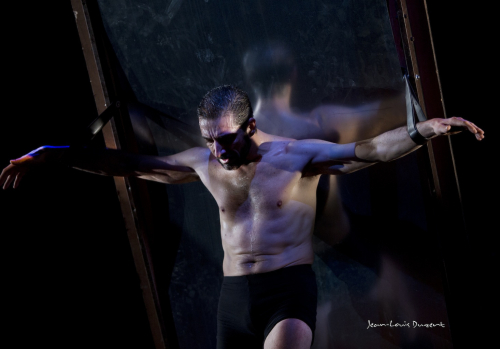
TUÉTANO
ANDRÉS MARÍN continues his futuristic dive into the abyss of flamenco in TUÉTANO, which will be presented within the Choreographic Rendez-vous series organized by Les Gémeaux (Paris, Sceaux) on May 29th & 30th with guest artist Concha Vargas.
TUETANO 29 & 30 of May in Les Gemeaux SCEAUX
✖
Ad Libitum
Andrés Marín gives full rein to his creative virtuosity in Ad Libitum, his latest work created for the Thêatre Suresnes in France.
10,11,12 October. Théâtre de Suresnes Jean Vilar, SURESNES
14 October. Ma Scène Nationale, MONTBELIARD
2, 3 April 2015 Flamenco Festival Tanzhaus nrw, DUSSELDORF
10,11,12 April 2015 Théâtre des Gémeaux, SCEAUX
✖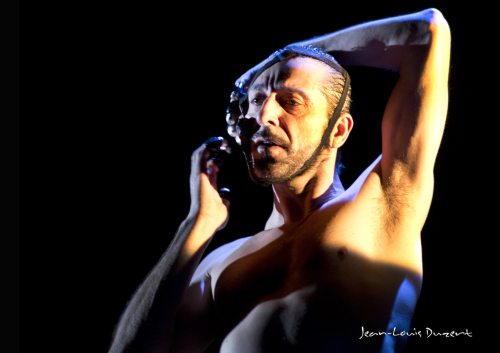
MUSÉE NATIONAL PICASSO-PARIS: CARTE BLANCHE À ANDRES MARIN
The MUSÉE NATIONAL PICASSO-PARIS has given carte blanche to four contemporary artists, Andrés Marín among them, to recreate a choreographic path through the collection. Nocturnes, a monthly after-hours event, offers a brand new visitor experience and an opportunity to explore the works from a different angle.
"Strolling through a choreography of forms in which every angle, every curve, every line is a step, face-to-face with the work, emotion leads me to grasp the movement and musicality, dance the colours, allow myself to be absorbed in the power of suggestion, the subversiveness and transgressive desire to always go further. There is something visceral in these forms in motion, these distortions, just like in dance."
-Andrés Marín
NOCTURNE: CARTE BLANCHE À ANDRES MARIN February 20th at 7 PM.
✖
Andrés Marín and Bártabas: Golgota
French choreographer and director BARTABAS, pioneer of original forms of expression combining equestrian art, music, dance and acting, and director of the Theatre Equestre Zingaro in Paris, has invited ANDRÉS MARÍN to collaborate as a dancer and choreographer in his new show: GOLGOTA.After ENTRE´APERÇU and LE CENTAURE ET L´ANIMAL, the acclaimed French artist returns to the stage in a "mano a mano" with contemporary flamenco dancer ANDRÉS MARÍN, in a dialogue between man, animal, dance and the silent music of Tomás Luís de Victoria; once again demonstrating that flamenco is a living art form which knows no boundaries.During the 2013/14 season GOLGOTA will enjoy more than 60 performances in the some of Europe´s most prestigious theaters.
✖
Messiaen x Andrés Marín
MESSIAEN x ANDRES MARIN: Convinced that flamenco is fully capable of dialoguing with other art forms, Andrés Marín takes on one of the greatest compositions of the 20th century: Quartet for the End of Time by Olivier Messiaen, with Trío Arbús and clarinetist Joan Enric Lluna.
Festival de Música CLASICA X CONTEMPORANEOS
Auditorio Nacional de Música de Madrid. Sala de Cámara
Saturday, October 18th 2014 7:30 PM
+ INFO
✖
Amen en la voz del hombre
The Sacred Art Festival of Evron will be presenting the premiere of Amén en la Voz del Hombre, a show created and directed by Andrés Marín, featuring artists Segundo Falcón, Jesús Méndez and Patricia Guerrero. The work explores the manifestion of Man through the Spanish songform, the saeta, with musicians Miguel Maseda (bassoon), Angel Sánchez (oboe) and Javier Trigos (clarinet).
For more information
✖
Tuétano in Arte Live Web
We invite you to view an online video of the show Tuétano, filmed live by the cultural channel Arte on January 14th at the Théâtre Bernardette Lafont in Nîmes.
✖
Op.24 in Flamenco Viene del Sur
On March 4th ANDRÉS MARÍN will present OP.24 in Seville´s Teatro Central within the framework of the 17th edition of the Flamenco Viene del Sur series.
For more information: www.juntadeandalucia.es/cultura/iaf/opencms/portal/Programas/FVS/
✖
OP.24 on tour in France in January
ANDRÉS MARÍN continues his French tour with OP.24, a vibrant show in constant evolution as if it were a laboratory of creation for the artist. The year 24 symbolises an attempt to expand and innovate flamenco. While some adhered to the strictest canons of this art, others explored fresh approaches to attract a new audience. Op. 24 finds its place in this context of transition and freedom. The show will be presented in the following cities at the end of January:
25 JANUARY en L'Onyx de SAINT HERBLAIN
28 - 29 JANUARY Theatre de la Butte de CHERBOURG
✖
Tuétano in the Flamenco Festival Of Nimes
ANDRÉS MARÍN, more sombre and provocative than ever, continues his futuristic diving into the abyss of flamenco in his latest show, TUÉTANO, which will be presented in the Festival Flamenco of Nimes (France) on January 14th, with guest artists Concha Vargas and La Macanita. For more information: http://www.theatredenimes.com/spect-499-andres_marin_tuetano.html
SOLD OUT
✖

